HVAC 101
HVAC Basics: How Does Central Heating and Air Work?
By Anne Fonda with expert review by Kimberly Sexton, Senior Systems Engineer
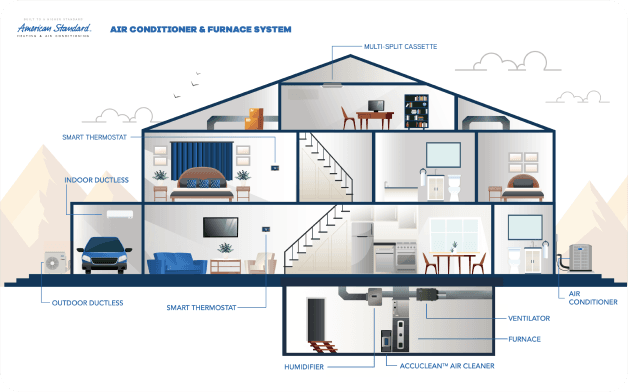
At its simplest, a central heating, ventilation, and air conditioning (HVAC) system distributes heated or cooled air to every room in your home using a system of ductwork, registers, and return air vents. This is in contrast to a window unit air conditioner or portable space heater, which only heats or cools one room.
How does a central air conditioning system work?
Thermostats act as a catalyst for the central cooling process. When the indoor air temperature creeps above your set temperature, it alerts the rest of the system that it’s time to go to work and start cooling to achieve your desired temperature.
True to its name, central cooling is the process that removes heat and dehumidifies the air in your home so you can stay cool inside when it gets hot outside. This happens during the refrigeration cycle. During this cycle, refrigerant flows through the various components of a cooling system:
- Compressor
- Condenser Coil
- Expansion Valve
- Evaporator Coil
During the cooling cycle, the refrigerant changes form from liquid to gas and back to liquid as it absorbs heat and transfers it outside. Removing the heat makes it feel cooler inside.
Central air system options
Three different systems can achieve central cooling in your home. The two most common central cooling systems are a split-system air conditioner or a split-system heat pump, both of which are paired with an indoor unit, either a furnace or an air handler.
The outdoor unit holds a fan, compressor, and outdoor coil, while the indoor unit holds a blower and indoor coil. A split-system air conditioner can only cool, so it’s usually paired with a furnace for heating, or sometimes an air handler with electric heat strips. On the other hand, an air source heat pump can both heat and cool your home depending on the flow of refrigerant at any given time.
The third type of central cooling system is called a packaged air conditioner or packaged heat pump. A packaged system is different from the traditional split system because the entire system sits outside of your home. It does have most of the same parts as a split system.
How does central heating work?
When we think about central heating systems, we can actually think about them in largely the same way we think about central cooling systems. But instead of moving hot air out, central heating systems either burn fuel to generate heat or move hot air inside. The method your system uses depends on which system is in your home.
Central heating system options
Your central heating system typically uses either a heat pump or a furnace. There are also packaged units combining an AC and furnace, packaged heat pumps, and packaged hybrid systems. Boilers are a less common option.
Furnaces and air handlers
Furnaces are the central heating systems that make their own heat. They burn fuel like natural gas or oil to produce heat and warm your home. Another method of heating your home is with an air handler. While air handlers can generate their own heat using electric heat strips, they are commonly paired with a heat pump.
Electric Heat pumps
Electric heat pumps are the central heating systems that move air around to heat your home. Heat pumps work great in a variety of climates because they can perform dual heating and cooling functions.
Central heating process
Similar to the central cooling process, the thermostat also serves as the catalyst for the central heating process. When the inside temperature drops below your set temperature on your thermostat, it alerts the central HVAC system that it’s time to warm things up.
How do heat pumps heat?
For electric heat pumps to heat, they operate the same way they do when they’re cooling, except in reverse. When the heat pump needs to perform an opposite function, the reversing valve in the outdoor unit activates to reverse the flow of refrigerant.
Then, the heat pump can absorb heat and humidity from outside and send it inside, instead of the other way around. The reversing valve does this automatically when you change from Cool to Heat on your thermostat and the thermostat calls for heat.
How do furnaces heat?
In contrast to an electric heat pump, a furnace burns fossil fuels to produce heat. Again, the thermostat kicks off the heating process, but beyond that, the entire furnace heating process is unique.
The furnace is connected to a gas line or oil supply. When the thermostat sends the signal to begin heating, the fuel valve sends fuel to the ignitors and burners. Once the fuel ignites, the flames heat the heat exchanger. The heat exchanger warms the air flowing into the furnace, and the blower fan blows the heated air into your ductwork and throughout your home.
What should homeowners do before central heating and cooling installation?
Determine what’s best for you
You’ll have unique heating and cooling needs based on a combination of factors, including the climate where you live, the size and construction of your home, and more. Before you invest in a central heating or cooling system, sit down and evaluate your needs to ensure you’re investing in the right HVAC system. Your local independent American Standard dealer can help walk you through the buying process.
Prepare for HVAC replacement
Central heating and cooling systems can take a few hours to a day or two to install, depending on the type of system you’ve purchased and the complexity of the installation. Ensure you’ll be home to answer any questions the HVAC installers might have for you during installation. Indoor units are frequently installed in unused or clutter-filled spaces in the home (like an attic or basement), so make sure the space is clear for your technicians!
Hire a licensed HVAC professional
HVAC system installation should be left to a licensed technician. Remember to look for state and local licensing before hiring any HVAC company, as well as any additional certifications that indicate expertise, like NATE certification. Your American Standard dealer is ready to help.
Related products

Get helpful HVAC tips in our newsletter
Sign up for our email newsletter to learn helpful HVAC tips and tricks before you purchase your system.Related articles


Anne Fonda, Content Writer
A Content Writer with Trane Technologies, Anne Fonda researches topics and writes for Trane® and associated residential HVAC brands. She works in collaboration with Trane Technologies subject matter experts, offering easy-to-understand, informative content on complex topics. Her goal is to help consumers make informed decisions on the products and services they need.
She has written for HVAC and other service provider websites for over 16 years. Before transitioning to web content writing, Anne had a 14-year stint as an award-winning journalist. She graduated cum laude from the University of Missouri-Columbia School of Journalism.
When she’s not working, Anne enjoys playing word games, reading, gardening, spending time with family, and visiting gardens and museums.